A small kitchen remodel can deliver as much value as a full-size one — sometimes more. Tighter footprints just mean every choice carries more weight, and the planning matters more than the square footage.
A small kitchen remodel in Southeast Indiana typically runs $20,000 to $45,000 and takes 4 to 7 weeks of construction. Cost depends mostly on whether you keep the existing layout or move plumbing and electrical.
What counts as a small kitchen remodel?
A small kitchen is usually anything under 100 square feet of floor space. Think galley kitchens, U-shape kitchens in older homes, or the compact footprints common in Lawrenceburg ranches and Cincinnati-area bungalows.
The size doesn't change what the work involves. You still deal with cabinets, counters, plumbing, electrical, flooring, and finishes. It just means tighter tolerances and fewer places to hide a mistake.
Most kitchens we remodel across Dearborn County land in this category. Older Indiana homes were built when kitchens were workrooms, not living spaces, and the footprints reflect that.
How much does a small kitchen remodel cost?
Most small kitchen remodels in Southeast Indiana run $20,000 to $45,000. The range comes down to materials and whether you change the layout.
Here's how the tiers usually break out:
Cabinet refacing or paint, laminate or entry-level quartz counters, mid-grade fixtures, vinyl plank floor. Same layout, no plumbing or electrical changes.
All-new cabinets, quartz or granite counters, tile backsplash, new appliances, updated lighting and electrical. Same footprint.
Wall removal, relocated plumbing, custom cabinets, premium counters, hardwood or tile flooring. Often opens to a dining or living area.
Where small kitchens get expensive: removing walls (load-bearing or not, you need a structural plan), moving plumbing or gas lines, and custom cabinetry built to fit odd dimensions. None of that scales down with square footage.
How long does a small kitchen remodel take?
Plan on 4 to 7 weeks of construction once demo starts. Smaller footprints don't always mean shorter timelines, because the same trades have to come through in the same order.
Here's how a typical small kitchen project breaks down:
- Week 1. Demo, rough plumbing and electrical changes, framing if you're moving anything.
- Week 2. Drywall, primer, flooring underlayment, rough inspection.
- Weeks 3–4. Cabinets installed, counters templated and fabricated.
- Weeks 5–6. Counters set, backsplash, plumbing trim, appliance install, paint.
- Week 7. Punch list, final inspection, walkthrough.
Add 2 to 4 weeks of planning and ordering before construction starts. Cabinets and counters have lead times even when the project is small.
Where to spend (and where to save) in a small kitchen
In a small space, every surface gets seen. Cheap finishes don't fade into the background — they sit at eye level. That changes the spend strategy.
- Spend on cabinets. They're 30 to 40 percent of the budget and the thing your eye lands on first. Cheap cabinets in a small space look cheap fast.
- Spend on counters. Quartz is worth the upgrade over laminate. Fewer seams, better durability, and the counter run is short enough that the price difference is manageable.
- Save on appliances. A small kitchen rarely needs a 48-inch range. Mid-range appliances from Bosch, GE Profile, or KitchenAid look great and last.
- Save on backsplash. Subway tile or a clean stacked tile keeps cost down and makes the room feel bigger.
- Spend on lighting. Under-cabinet LEDs and good ceiling cans transform a small kitchen more than almost any other change.
In a small kitchen, the finishes you choose live three feet from your face. Spend like it.
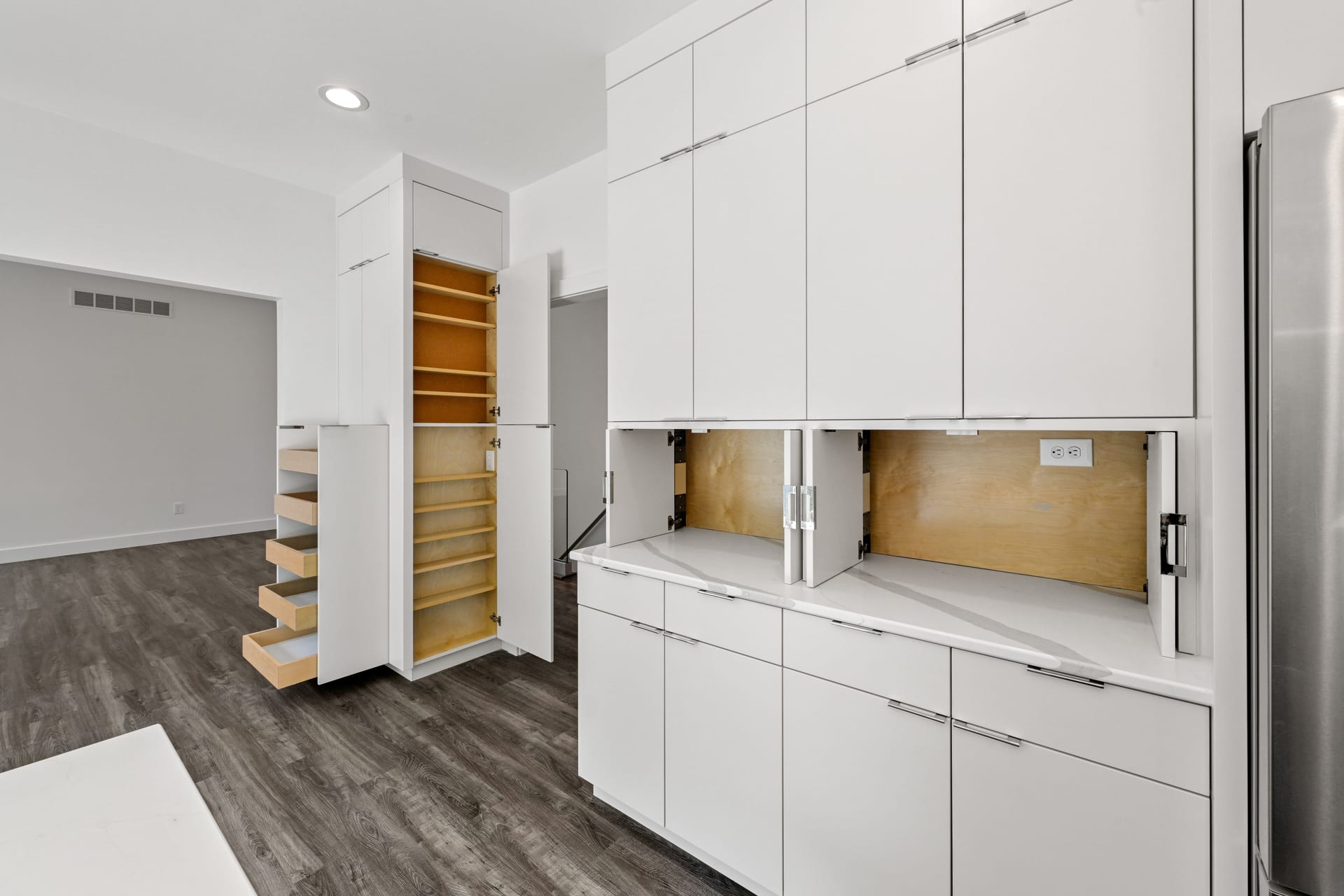
Common mistakes we see in small kitchen remodels
The pattern is the same across most small remodels we walk into mid-project. The homeowner started with a finish they loved, then worked backward into a layout that didn't fit.
The fixes are easy if you catch them in planning. Painful if you catch them at install.
- Picking cabinets before measuring appliances. A 36-inch range needs 36 inches of run plus clearance. Boxes that fit on paper don't always fit on the wall.
- Skipping the structural review. Removing a half-wall sounds easy until you find a duct or a load path inside it. A pre-demo walk catches this.
- Underspecing electrical. An older Lawrenceburg kitchen often has one or two circuits doing everything. Code now wants several. Plan for the upgrade.
- Forgetting the storage tradeoff. Open shelving looks great in photos. In a small kitchen, you usually need every cabinet you can get.
Should you keep the layout or change it?
Most of the time, keeping the existing layout is the right call. You save 30 to 40 percent versus a layout change, and the bottlenecks in a small kitchen are usually about storage and finish, not floor plan.
It's worth changing the layout when a load-bearing wall is the only thing between your kitchen and a usable dining area, when plumbing is already failing, or when the existing footprint forces a refrigerator into a doorway. Those situations actually pay back the extra cost.
If you're not sure which side of that line your kitchen falls on, that's where we come in. JDC has been remodeling kitchens across Dearborn County and the Cincinnati tri-state area since 1996. See how we approach kitchen remodels, or get a free estimate and we'll walk through the options on your specific space.