Building a custom home in Southeast Indiana usually costs between $250 and $400 per square foot, depending on size, finishes, and what your lot needs before construction can even start. The honest answer is less about the headline number and more about what you actually get for it.
A custom home in Southeast Indiana typically runs $250 to $400 per square foot in 2026. A 2,500 sq ft build generally lands between $625,000 and $1,000,000 all in. Lot conditions, finish level, and structural complexity move that number more than anything else.
What a Custom Home Costs in Southeast Indiana
Most homeowners hear a per-square-foot number and try to do the math from there. That works as a starting point, but it leaves a lot of variables on the table.
In Lawrenceburg and across Dearborn County, a true custom home runs $250 to $400 per square foot right now. A modest 2,000 sq ft build with mid-grade finishes might land near $500,000. A 3,500 sq ft home with stone, custom millwork, and a finished walkout can clear $1.4 million.
The Cincinnati tri-state market puts gentle upward pressure on materials and trade labor. Lots that need significant grading, tree clearing, or a septic system push numbers further than most homeowners expect.
What Actually Drives the Cost
Three things move the budget more than anything else: the lot, the finish level, and the structural complexity of the design. Here is roughly what each tier looks like in practice.
Standard floor plan, builder-grade fixtures, basic site work, vinyl or fiber-cement siding, asphalt shingles. Typically 2,000 to 2,500 sq ft.
Custom floor plan, semi-custom cabinets, quartz counters, hardwood floors, upgraded trim, brick or stone accents, full basement.
Fully custom architectural design, premium finishes, full stone exterior, finished walkout, integrated smart home, custom millwork throughout.
The cheapest house to build is rarely the cheapest house to own. Cutting corners on framing, insulation, or windows shows up in heating bills, callbacks, and resale.
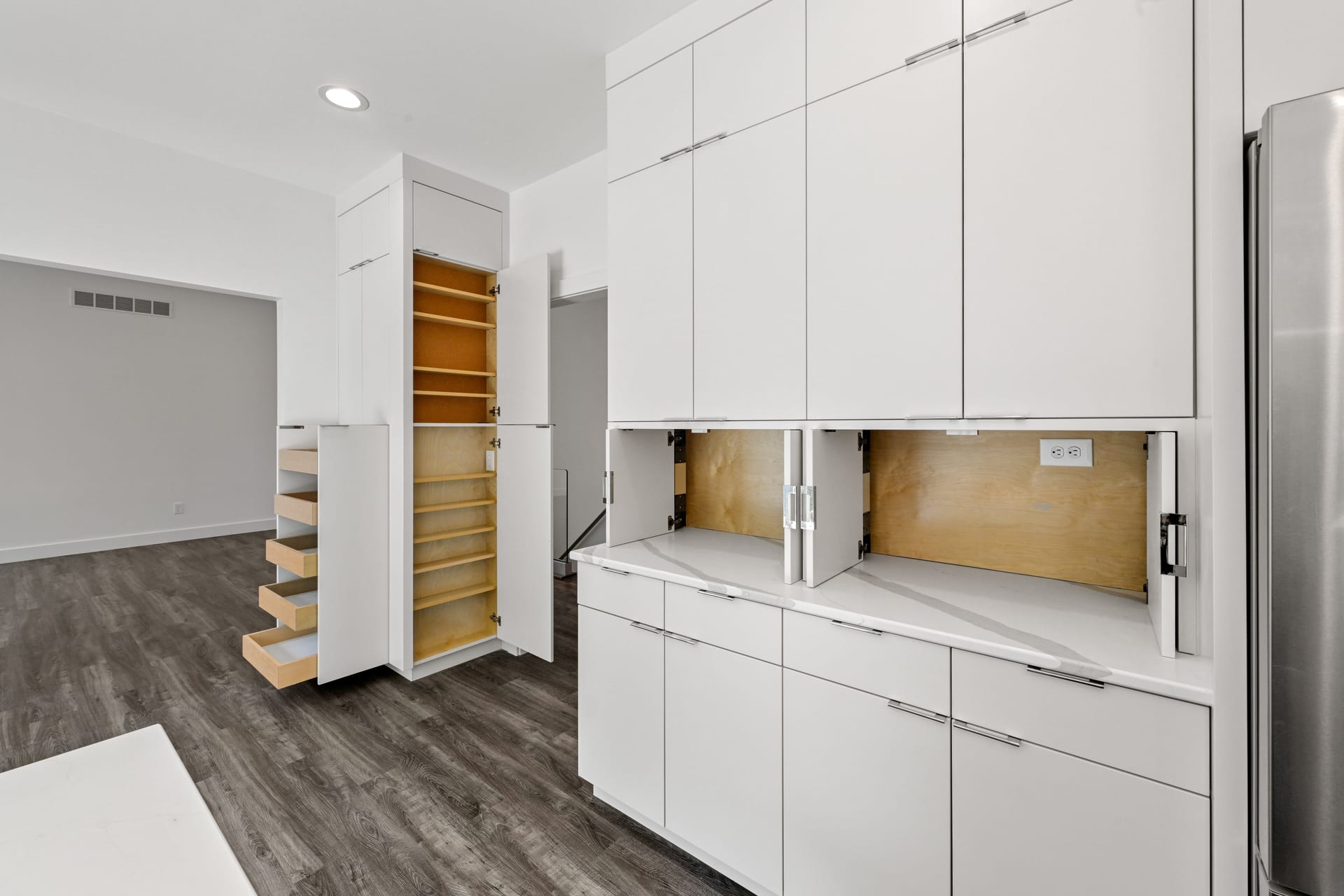
What's Included in the Per-Square-Foot Number
A reputable builder's price covers a lot more than walls and a roof. The hard cost typically includes:
- Site work: excavation, foundation, septic or sewer tap, water service, driveway base.
- Shell: framing, sheathing, roofing, windows, exterior doors, siding or masonry.
- Mechanicals: rough plumbing, HVAC, electrical, gas lines.
- Interior finishes: drywall, paint, flooring, cabinets, counters, trim, fixtures, appliances.
- Permits and inspections: required by Dearborn County and applicable municipalities.
- Builder overhead and warranty: project management, supervision, and the post-build warranty.
What it usually does not include: the land itself, surveying, soft costs like architectural fees, landscaping beyond basic grading, and window treatments or furniture. Build those into your full budget so you are not surprised at move-in.
Where Homeowners Go Over Budget
After almost three decades of custom home builds across Southeast Indiana, we see the same overruns again and again. They are avoidable with planning.
- Lot surprises. Soil that needs piers, rock that needs blasting, or a long utility run from the road can add $30,000 to $80,000 fast.
- Finish creep. Upgrading the kitchen package, the master bath, or the flooring across the whole house mid-build is the most common budget killer.
- Change orders. Moving a wall after framing, adding outlets, or changing window sizes after rough-in costs more than including it from day one.
- Allowance underestimates. Cabinet, lighting, and tile allowances set artificially low in the contract make the headline price look better and the final bill bigger.
- Long timelines. Construction interest, temporary housing, and storage stack up if the schedule slips by 60+ days.
How to Build a Realistic Budget
The cleanest approach is to start with the land, get a real survey, and then design to a number rather than designing first and pricing later. That single decision saves more redesign cost than any other thing we see.
We tell every client at JDC to plan for a 10% contingency on top of the contract price. Not because we expect to use it, but because the homeowners who do not plan for it are the ones who feel real stress when something does come up.
If you are early in the process, our custom home page walks through how we structure pricing and what is included in our build agreements. We have been doing this in Lawrenceburg since 1996, and we would rather have an honest cost conversation up front than surprise anyone six months in.
Want a real number for a real lot? Get a free estimate and we will talk through what your build would actually look like.