If you're planning a bathroom remodel in Southeast Indiana, most projects run 3 to 8 weeks from demo through final walkthrough. The size of the room matters less than you'd think. What really determines where you land is scope, tile selection, and one decision most homeowners don't see coming: the shower enclosure.
A bathroom remodel takes 3 to 8 weeks from demo to completion. Cosmetic updates, like a new vanity, fixtures, and paint, can wrap up in one to two weeks. A full gut renovation with custom tile, relocated plumbing, and a glass shower enclosure will run six to eight weeks or longer. Tile work and waterproofing inspections set the pace more than anything else.
What Affects a Bathroom Remodel Timeline?
Three variables drive most of the variation from one project to the next.
Scope of Work
More than any other room, a bathroom's timeline is determined by how deep you're going. Here's a simple breakdown:
| Scope | What It Includes | Typical Timeline |
|---|---|---|
| Cosmetic refresh | New vanity, toilet, faucets, mirror, paint — no tile, no demo | 1–2 weeks |
| Mid-range remodel | New tile, vanity, fixtures, shower surround — no layout changes | 3–5 weeks |
| Full gut renovation | Layout changes, relocated plumbing, custom tile, new shower or tub | 6–8+ weeks |
A small bathroom remodel can actually take just as long as a larger one if the scope is the same. It's what you're doing, not how many square feet you're doing it in.
Tile Selection and Lead Times
Tile is the cabinet equivalent of a bathroom remodel. It has to be on-site before work can begin in the wet area, and each section — floor, walls, shower surround — is set and grouted separately. Large-format tile requires more precision to install and longer cure windows between sessions.
Stock tile from a local supplier can be in your hands the same week. Custom or specialty tile ordered online can take 3 to 6 weeks to arrive. If you haven't ordered it before demo day, your project is waiting on a pallet.
Permits
Do you need a permit to remodel a bathroom? It depends on what you're touching. In Dearborn County, any work that relocates drain lines or supply lines, adds a new exhaust fan circuit, or involves structural changes requires a permit. A straight swap — new vanity for old, same location, same hookups — typically doesn't.
Don't skip the permit to save a week. A failed inspection after tile is set can mean tearing it out. Budget 1 to 2 weeks for permit processing before rough-in work can start on permitted systems.
A Phase-by-Phase Bathroom Remodel Timeline
Here's how a full bathroom remodel unfolds in the Lawrenceburg and greater Cincinnati area.
Out goes the vanity, toilet, tub or shower surround, tile, and flooring. A bathroom clears faster than a kitchen — usually one day for a standard bath. This is also when hidden problems reveal themselves: water damage behind walls, subfloor rot under old tile, outdated plumbing connections that need to be addressed before anything else.
If your layout is changing, this is where it happens. Plumbers move drain lines and supply rough-ins to their new locations. Electricians run circuits for GFCI outlets, the exhaust fan, and any heated floor elements. Inspections must happen before walls close.
This step doesn't exist in a kitchen remodel, and it's one reason bathrooms deserve their own timeline. Cement board or a similar substrate goes up in wet areas. A waterproofing membrane is applied — especially in the shower — and must fully cure before tile can go up. This is also a common inspection checkpoint. You can't rush it.
The most time-intensive trade in the bathroom. Floor tile, wall tile, and shower tile are set in separate sessions, each requiring grout cure time of 24 to 72 hours before the next phase can proceed. Large-format tile and intricate patterns slow this down significantly. It's worth it — but plan the timeline accordingly.
Once tile is set and cured, the vanity goes in, followed by the countertop, faucet, toilet, and mirror or medicine cabinet. Plumbing connections are made and tested. This phase moves quickly when everything is staged and ready.
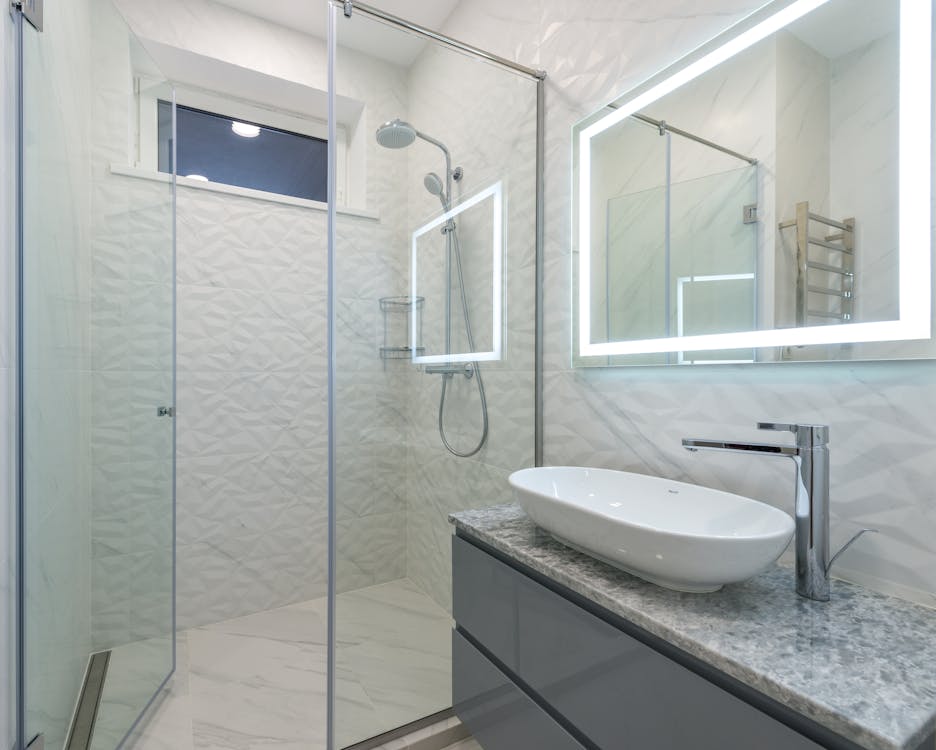
This is the wildcard most homeowners don't plan for. Custom glass is measured only after tile is fully set — then fabricated to fit. Lead times run 3 to 5 weeks. Order it the moment tile is done, not after. If you're planning a custom enclosure, build that wait into your calendar from the beginning.
Final paint goes on after tile is complete — the wet work comes first, always. Towel bars, toilet paper holders, door hardware, and trim are installed last. It's the finishing layer that makes the room feel done.
Touch-ups, any open items, and a full walkthrough with the homeowner. We don't call a project complete until the homeowner says it is.
"Tile work sets the pace for every bathroom remodel. You can't rush a cure. Once it's set, it's done — and if it wasn't done right, you're doing it again."
What Can Slow a Bathroom Remodel Down?
Most delays in bathroom projects come from four places. Knowing them in advance puts you ahead of most homeowners.
- Hidden water damage. It's behind more bathroom walls than you'd expect — especially in homes built before 1990. Old grout, failed caulk, and slow leaks work quietly for years. When the walls come down, what's there has to be repaired before anything else goes up. Budget a few extra days and try not to be surprised.
- Custom glass lead times. Three to five weeks after tile is set. This is the most common source of a project that "almost done" for weeks. Order it the day tile is finished.
- Inspection scheduling. In Indiana, scheduling a waterproofing or rough-in inspection can take 2 to 3 business days. Your contractor factors this in, but it's real time on the calendar regardless.
- One-bathroom households. If this is your only full bath, sequencing has to account for that. A good contractor plans the project so you're never without a functioning toilet. That usually means leaving the toilet connected until the last possible moment and moving fast on the plumbing phase.
How to Plan Your Bathroom Remodel
Start making decisions earlier than feels necessary. Late choices are the primary reason bathroom projects run long.
- Finalize your tile selections 3 to 6 weeks before demo day. If it needs to be ordered, order it before a single thing comes out of the wall.
- Confirm permit requirements with your contractor during the estimate. If permits are needed, allow 1 to 2 weeks for processing before rough-in work begins.
- Decide on the shower enclosure early. Custom glass is a 3 to 5 week lead time after tile. If you want it done before you need the bathroom, that decision has to happen at the start of the project, not the end.
- Schedule your contractor 4 to 8 weeks in advance. Peak season in Southeast Indiana runs spring through early fall. If you want a summer project, call in March.
- Think through the one-bathroom scenario. If this is your only full bath, tell your contractor upfront. It affects how the project gets sequenced.
When Should You Start Planning?
As soon as you know you want to do it.
Most reputable remodeling contractors in the Lawrenceburg and Cincinnati area are booked 4 to 8 weeks out. Spring and summer schedules fill up fast. If you want the project done before the holidays, the planning window opens in August. If you want a spring start, reach out in January or February.
The homeowners who get the best results are the ones who start planning a full season ahead — not the ones calling in June hoping to be done by July.
Ready to Start Planning Your Bathroom?
JDC Construction has been remodeling bathrooms in Southeast Indiana since 1996. We'll walk you through timeline, tile selection, and what to expect before a single thing comes off the wall.
We serve homeowners in Lawrenceburg, Aurora, Dillsboro, Greendale, and across the greater Cincinnati and northern Kentucky area.
See our bathroom remodeling services, or reach out directly to get started.