A kitchen remodel before-and-after isn't just about new finishes. It's about how much better the space works for the people who live in it. Better light, better flow, more storage, and a layout that actually fits how you cook.
A typical kitchen remodel transformation in Southeast Indiana takes 6 to 12 weeks and runs $30,000 to $80,000. The before-and-after gap depends less on budget than on three things: layout changes, lighting, and finish quality. The strongest renovations rework the floor plan, open up sightlines, and replace dated finishes with materials that hold up.
What Drives a Real Before-and-After Transformation
Paint and new countertops won't move the needle much. The kitchens that look genuinely different in the "after" photos are the ones where we changed something structural.
That usually means one of three things: relocating a wall, adding an island, or moving a window. Each one shifts how light moves through the space and how you use it day-to-day. Without one of those, you're mostly refacing the same kitchen.
The other lever is lighting. Most older kitchens in Dearborn County were built with a single ceiling fixture and weak under-cabinet bulbs. Layered lighting (recessed cans, pendants over the island, dimmable under-cabinets) is one of the biggest reasons "after" photos feel like a different room.
What the "Before" Usually Looks Like
Most of the kitchens we tear out in Lawrenceburg and the Cincinnati area share the same problems. Closed-off floor plans cut off from the dining room. Dark cabinets that swallow the natural light. Laminate counters worn at the edges. A peninsula that blocks foot traffic.
The functional issues are usually worse than the cosmetic ones. Not enough counter space. Drawers that don't open all the way. A range that's too close to the refrigerator. A sink positioned so two people can't work together.
If you've lived in your house more than ten years, you've probably learned to work around at least three of those problems. A real remodel fixes them. It doesn't just cover them up.
What Changes in the "After"
Walk into a finished JDC kitchen and the first thing you notice is space. Not because the room got bigger, but because the layout got smarter. Sightlines open up. Light moves further. The traffic path actually works.
Finishes matter, but they're the last 20%. Quartz or quality granite counters. Soft-close cabinetry with full-extension drawers. A single-bowl undermount sink. A vent hood that vents outside instead of recirculating.
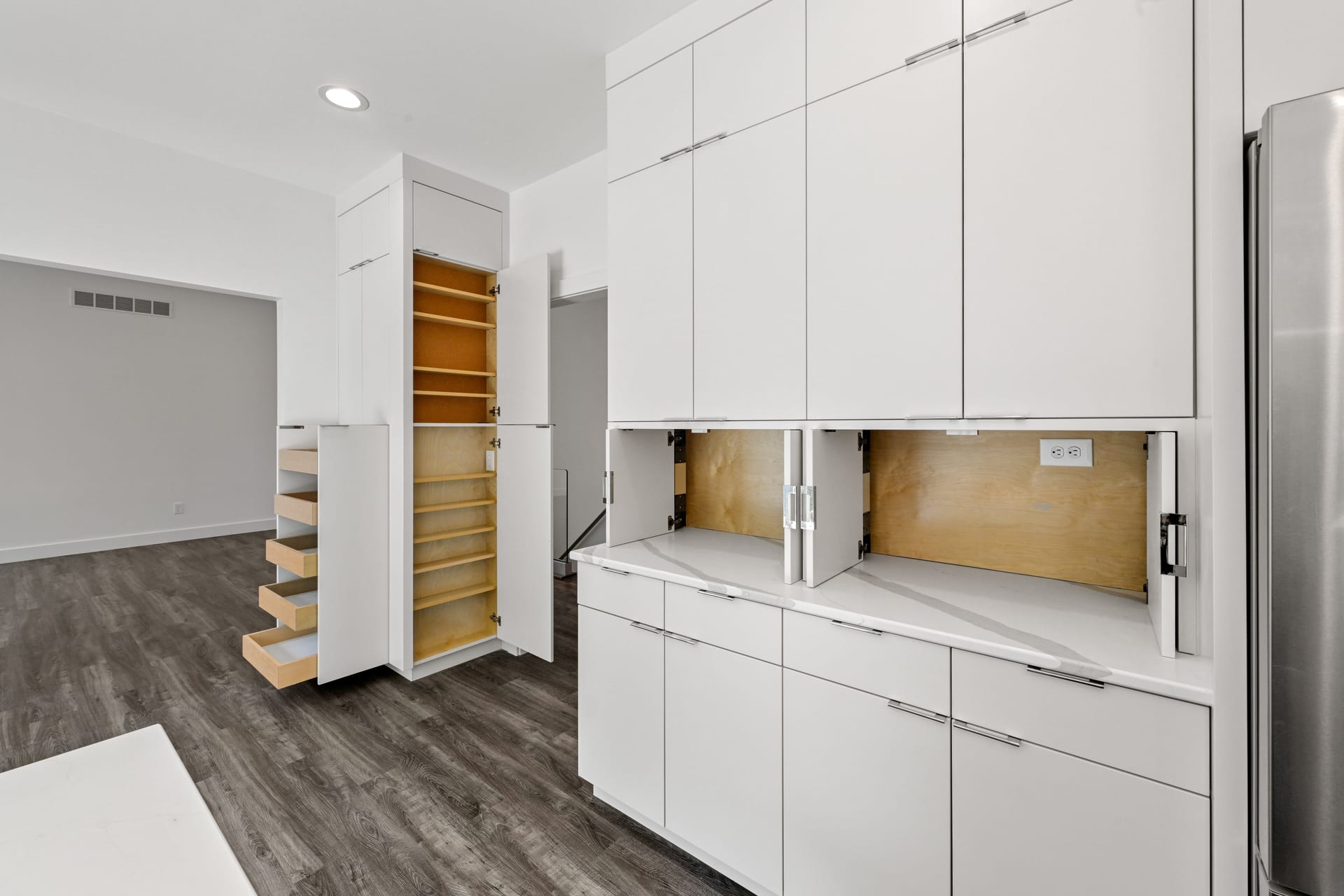
What homeowners tell us they notice most isn't usually what they thought it would be. It's the small things. Pulling out a deep pan drawer instead of digging in a back corner cabinet. Cooking with someone else without bumping into them. Walking in at night and being able to actually see the counter.
"You think the new countertops are going to be the showstopper. Then you use the kitchen for a week and realize it's the layout you can't stop talking about."
Timelines, Costs, and Realistic Expectations
What's actually possible inside a "before and after" depends on budget and scope. We see three common tiers across Southeast Indiana.
Same layout, new everything. Cabinets, counters, appliances, flooring, paint, lighting. Best when the bones already work.
Walls move, an island goes in, or a window enlarges. Same footprint, but the layout actually changes.
Kitchen merges with the dining or family room. Structural changes, custom cabinetry, premium finishes throughout.
If you want the dramatic "after" everyone screenshots, you usually need Tier 2 or 3. Tier 1 looks great on cabinets and finishes, but the layout in the photos will look the same as before.
Mistakes That Make a Before-and-After Underwhelming
We've seen plenty of kitchens that should have looked like a knockout transformation but didn't. A few patterns repeat:
- Skipping the lighting plan. New cabinets under a single can light still look dark in photos. A proper lighting design is one of the cheapest big wins.
- Matching cabinet color to wall color. Tone-on-tone hides the cabinetry detail. Even subtle contrast makes the room feel intentional.
- Forgetting the ceiling. A dropped soffit or popcorn texture in the "before" stays in the "after" if nobody flags it.
- Keeping the old appliances. A new kitchen with a 12-year-old range and yellowing dishwasher looks half-finished.
- Cheap hardware. Knobs and pulls are jewelry. The right ones cost a few hundred dollars and make $30K of cabinetry feel custom.
How JDC Approaches Kitchen Transformations
We've been remodeling kitchens in Southeast Indiana since 1996. That experience shows up most in the planning phase, catching layout problems on paper before the demo crew arrives.
Every project starts with a walkthrough and a frank conversation about budget, timeline, and what you actually want different about how the kitchen works. We won't try to talk you into a Tier 3 if a Tier 1 is the right call. And we'll tell you when something isn't worth the money.
You can see the difference in our portfolio projects across Dearborn County and the Cincinnati tri-state area. Different houses, different budgets. Same standard for the work.
Planning Your Own Before-and-After
If you're getting ready to remodel, a little upfront thinking goes a long way:
- Take honest "before" photos. Wide angles, multiple times of day. You'll appreciate them when the project is done.
- Identify the three things that bother you most. Layout, light, storage. Usually some combination of those.
- Get a realistic budget early. Knowing the tier you can afford shapes every other decision.
- Plan for two weeks of disruption beyond the schedule. Even smooth projects hit a delay or two.
- Choose finishes that age well. Quartz, simple cabinet profiles, neutral tile. Trendy choices look dated faster than you'd think.
If you'd like to see what a real transformation could look like in your home, we'd be glad to walk through the space and talk through options. Get a free estimate. No pressure, just a straight conversation about what's possible.